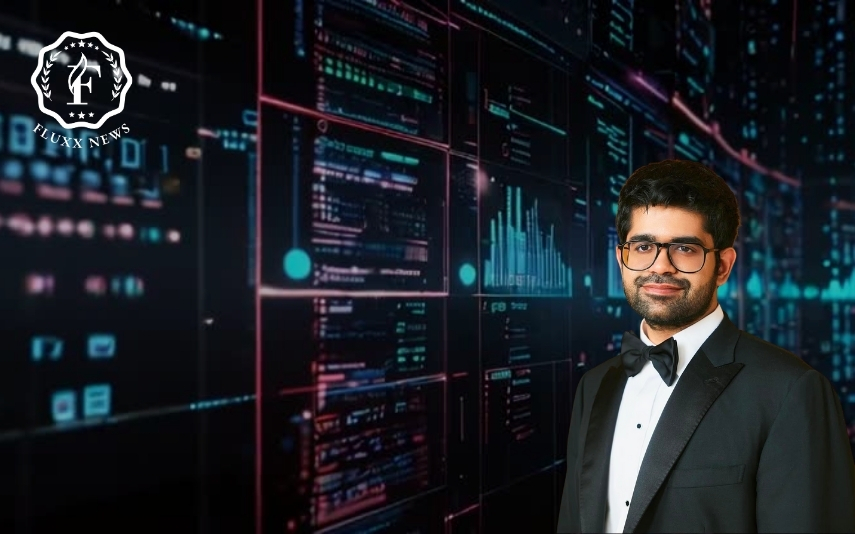
As global spending on data centres is projected to approach nearly $1 trillion by 2030, Perplexity CEO Aravind Srinivas has offered a contrarian view on the future of artificial intelligence. He thinks that competition between the tech giants is the least significant threat to massive data centers in the long term, but the emergence of on-device AI models, which do not have to be served by a centralized cloud infrastructure, is.
In a podcast with Prakhar Gupta on YouTube, Srinivas asserted that when it becomes possible to pack the intelligence of AI into a single chip and execute it efficiently on other devices, including smartphones and laptops, the inference of large-scale data centers would become obsolete to a significant extent. In this situation, users would not rely on the centralized servers in all AI-powered interactions.
Nowadays, such AI chatbots as ChatGPT, Gemini, Perplexity, and so on heavily depend on huge data centers run by companies like Google, Meta, Microsoft, and OpenAI. These plants are extremely costly to invest in, use a huge amount of electricity, and rely on very water-intensive cooling systems to operate. With the increasing usage of AI, the issue of energy usage, sustainability, and the cost of infrastructure is also escalating.
Srinivas believes on-device AI offers several advantages. Being present on your computer, they would be more adaptable to personal preferences of users. More to the point, the local processing would greatly enhance the privacy of the users, since the personal information would not have to be forwarded to the external servers in order to analyze the information.
Nevertheless, Srinivas conceded that the current AI models are excessive and overly computationally intensive to be executed efficiently using most consumer computing devices. He said he hoped that further developments in chip technology, especially by companies such as Apple and Qualcomm, would make AI that is both powerful and on-device a viable reality in the next several years.
Another significant issue in the development of AI that Srinivas addressed was the problem of hallucinations, for which he also confessed that some of the existing models produce wrong or falsified data. He estimated that this challenge would be mostly eliminated in the five years to come, when models and training methods will be refined.
If Srinivas’ vision materializes, the future of AI may shift away from centralized cloud dominance toward smarter, more private, and energy-efficient intelligence running directly in users’ hands.
Disclaimer: The news articles published on Fluxx News are based on reports from reputable third-party sources and are not original reporting by Fluxx News. While we strive to ensure accuracy and integrity, we cannot guarantee the completeness or timeliness of the information provided.