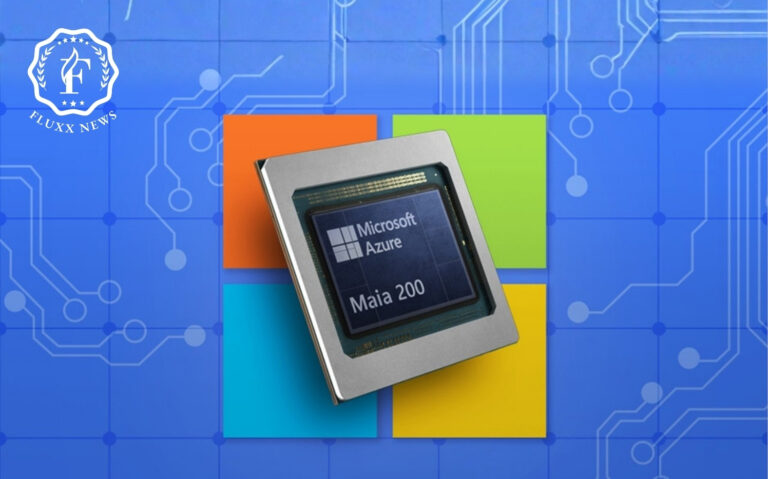
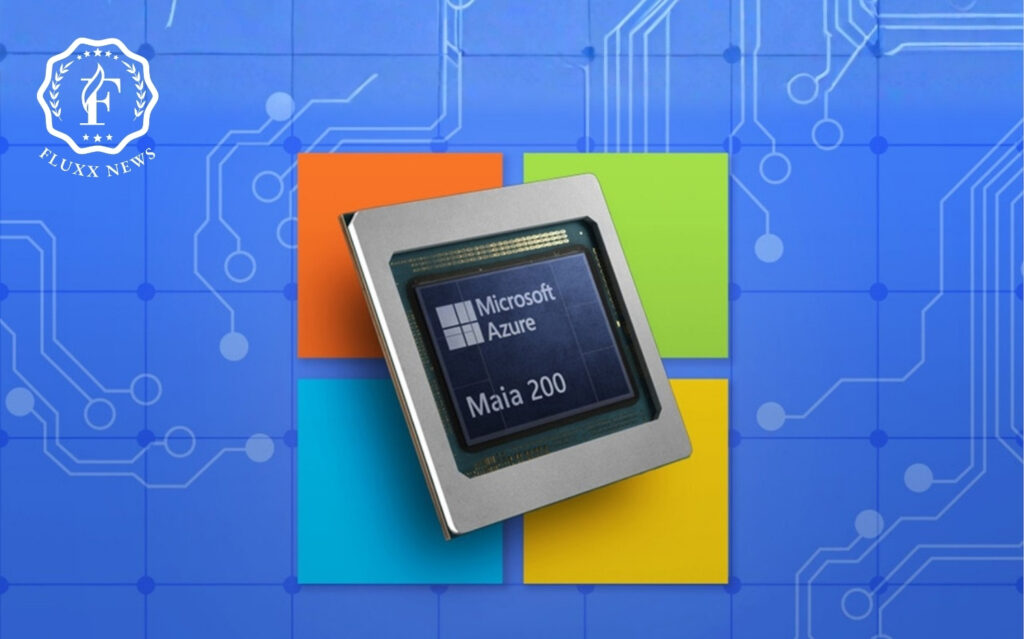
Microsoft has made a major move towards enhancing its AI system by launching its next-generation in-house AI chip; Maia 200. The new processor was announced in January 2026 and is already being tested in a Microsoft data center in Iowa, and more are planned to be deployed to Arizona. The action indicates an increasingly strong desire of Microsoft to get rid of reliance on the popular AI chips of Nvidia.
Due to the growing and acute demand of AI computing, large technology firms are turning to custom silicon solutions. Microsoft is not the only player that uses AI chips to execute cloud services through its own chip, as there is also Google and Amazon Web Services, which already have their own AI chips. The bigger goal is to have a more significant control over performance, costs, and supply chains and serve more complex AI loads.
Maia 200 chip is produced in Taiwan Semiconductor Manufacturing Company (TSMC) with the help of superior 3 nanometer process technology which is the manufacturing company of the recently produced Nvidia processors. Although Maia 200 lacks the latest memory standards in the market, Microsoft has offset this by giving the computer massive on-chip memory. This design solution aids in accelerating the data access and it is more efficient with large AI models.
Microsoft has oriented Maia 200 towards large scale AI inference applications. These are real-time applications like chatbots, search engines, and enterprise AI tools that have to be fast in responding to customer queries. With inference as the center of interest as opposed to training alone, Microsoft seeks to provide good performance whilst ensuring that power consumption and operating costs in its data centers are controlled.
Other than hardware, Microsoft is also laying heavy stress in software development to facilitate Maia 200. The popularity of Nvidia in the AI chip market is contributed to a great extent by its software ecosystem named CUDA that enables developers to optimise AI workloads effectively. Microsoft is developing its own software stack around Maia 200 in order to compete.
The most important component of this initiative is Triton, an open-source programming framework that was produced with the help of OpenAI. Triton allows developers to code and optimise AI code with less effort without using Nvidia-specific tools. Microsoft hopes that this will win the software developers over to its hardware platform and minimize barriers to entry.
According to the industry experts, the move by Microsoft is one of the trends among the giants of the cloud. The adoption of massive AI-based platforms by companies is making them less and less willing to rely on just one supplier of chips. An example of this change to in-house hardware development is Google’s Tensor Processing Units and Amazon inference hardware that is custom built.
Although this is a trend, it is quite obvious that Nvidia will continue to be a strong leader in the AI chip market, and in the short term, Maia 200 is unlikely to be able to surpass Nvidia products. But the introduction shows that cloud providers are becoming increasingly confident in their ability to create their own AI infrastructure. Microsoft now offers an extensive selection of AI models on its platforms, including models of OpenAI, GPT-5.2, models of Anthropic and xAI and Microsoft MAI and Phi models. Maia 200 might become one of the factors of influencing the way these systems will be implemented in the future.
Disclaimer: The news articles published on Fluxx News are based on reports from reputable third-party sources and are not original reporting by Fluxx News. While we strive to ensure accuracy and integrity, we cannot guarantee the completeness or timeliness of the information provided.