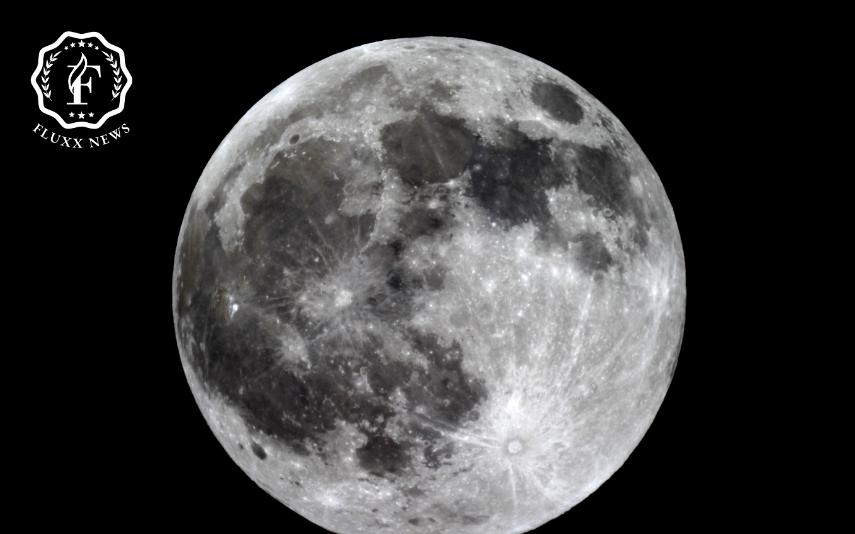
Scientists have made a surprising discovery on the Moon that could change what we know about its surface. A group of researchers who examined the soil taken by the Chang’e-6 satellite launched by China has discovered minute crystals of iron oxide, which are referred to as haematite and maghemite. They are commonly referred to as lunar rust since these minerals are formed by reacting iron and oxygen together. Until recently, scientists believed that the Moon contained nearly none of oxygen and was in a highly reduced, or non-oxidizing, form.
The Chang’e-6 mission also recovered the South Pole-Aitken (SPA) basin, which is one of the oldest and largest impact sites on the moon. When these samples were checked by the researchers, there was clear evidence of oxidation. This is relevant since the Moon does not have any atmosphere as Earth does, and its atmosphere is arid. In these circumstances, rusting should almost be impossible.
Scientists have come to the conclusion that the rust in these samples could have developed due to violent incidents by meteorites or other objects in space. These effects would have provided heat and released materials, which enabled oxidation to take place even in the harsh environment of the moon. Other scientists also believe that traces of oxygen available in the upper atmosphere of the Earth may have been able to travel to the moon over millions of years, aiding the process.
The discovery contradicts the historical views regarding the chemistry of the Moon and its history. It implies that the lunar surface can be more complicated and dynamic than it was believed to be before. The results assist researchers in comprehending the way in which the Moon developed and the interaction of the various space environments.
The significance of missions such as Chang’e-6 that enable researchers to test new samples from unexplored regions.With more missions planned in the coming years, scientists hope to uncover even more secrets hidden beneath the lunar surface.
Disclaimer: Fluxx News shares stories gathered from reliable third-party sources and does not create its own original reporting. We work to keep information accurate, but we cannot promise that every detail is complete or fully up to date.